Percentage of People Who Leave Good and Bad Reviews
A business's online reputation is more than important than ever. In fact, a company'southward online reputation is fast becoming one of their near valuable avails — if managed properly.
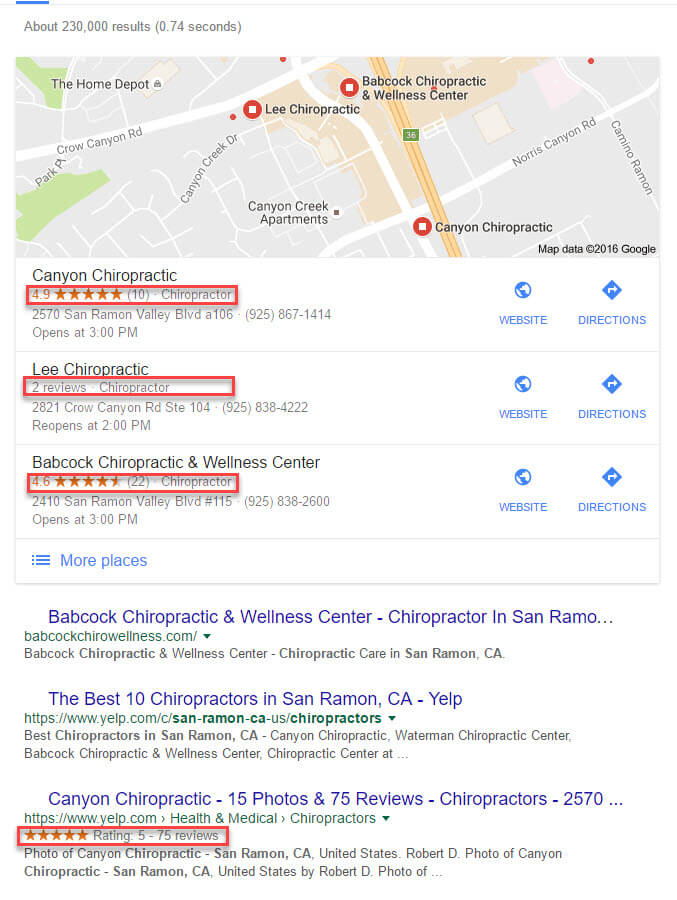
Why? In a world where online reviews show up nigh every time a person searches for a local business, potential customers tin't assistance but exist confronted with reviews about a local business'southward products or services — the good, the bad and (sometimes) the downright ugly.
So what touch on do these reviews have on people searching for a identify to spend their money?
BrightLocal's 2016 Local Consumer Review Survey
Every year, BrightLocal (disclosure: my employer) surveys everyday consumers to estimate the sentiment and attitudes they have about the local companies they exercise business with. The purpose of the survey? To assist small to medium-sized businesses (SMBs), digital marketing agencies and SEOs understand how online reviews influence the purchasing decisions consumers brand equally they search for local companies, products or services.
If yous (or your clients) take been avoiding the topic of online reviews upwards until now, I have a feeling yous will change your mind afterward yous acquire more about how consumers read and deed (or don't human activity) later on evaluating online reviews nigh businesses.
Virtually the 2016 Local Consumer Review Survey
The Local Consumer Review Survey is in its 6th year. Over the past several years, at that place has been a noticeable shift in how consumers search online for local businesses and the importance online reviews play in a consumer's purchasing process.
This year BrightLocal surveyed a Usa consumer panel made upward of i,000 individuals. The survey questions explore how consumers read and utilise the reviews they see online. The answers testify how businesses and marketers tin can qualify the value consumers put on online reviews and whether these reviews have any impact on a consumer's purchasing decisions.
Consumers see online reviews almost every time they search
More and more these days, consumers are using the internet to detect local businesses and see online reviews most every time they go online to practice a local search. Why the increase?
Over the past few years, many local businesses take realized the importance of optimizing their online presence for the local market by challenge their Google My Business or Bing Places for Business pages, creating location-specific pages on their website, adding Google Maps to their site and other local SEO strategies.
Additionally, Google shows online reviews in many search engine results pages (SERPs), and they even recently started adding third-party review sites and reviews to a business'southward Cognition Console.

Besides, because people accept access to a variety of devices to perform searches on, such as smartphones and tablets, information technology'southward easy for them to jump online wherever they are and search for reviews about a business organization, product or service.
And then, how do consumers read and use the information found in reviews? Allow's find out by looking at some of the survey questions and answers.
Which of these business types accept you read online reviews for?
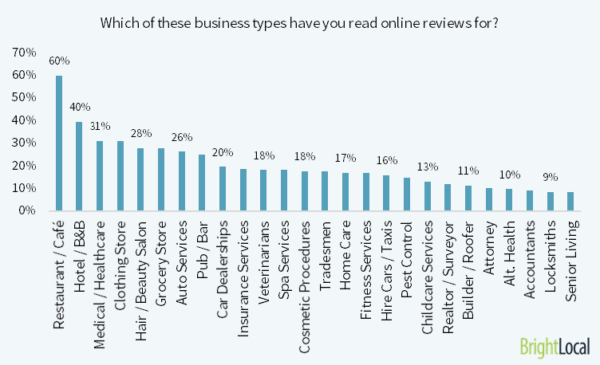
Notation: Respondents were told to select as many answers every bit needed.
Key findings:
- The most commonly read reviews past consumers are Eating place/Cafe reviews, with lx per centum of respondents having read reviews for businesses in this category.
- Hotels/Bed & Breakfasts reviews came in 2d, with 40 per centum of respondents seeking reviews for businesses in this category.
- Also popular are Medical/Healthcare Professionals, Clothing Shops, Pilus/Dazzler Salons, Automotive Services and Grocery Stores.
Restaurants/Cafes, Hotels/Bed & Breakfasts, Medical/Healthcare Professionals, Clothing Stores, Hair/Beauty Salons, Grocery Stores and Automotive Services are the main businesses that people want to read reviews for. One affair to consider is that these numbers are somewhat dependent on both the type of concern and how oft consumers tend to use that type of business concern.
For instance, business types that people utilise frequently (like restaurants or grocery stores) will probably have more reviews because more people simply visit these types of businesses more than often and on a regular footing. Yous volition probably find fewer reviews for locksmiths, accountants or pest control companies because these services are not needed as frequently.
Even though reviews for some business types are read less often, when onedemands those businesses (e.g., yous lock yourself out of your house or yous see cockroaches in your kitchen), and so consumers volition actively look at those reviews. Bottom line: every business benefits from having online reviews (no matter the manufacture).
How many online reviews do you lot read before you lot feel yous can trust a business?

Key findings:
- 90 percentage of consumers read just x reviews or fewer before they feel that they tin can trust a business (vs. 87 percent in 2015).
- 32 percentage of consumers form an opinion by reading ane to three reviews.
- 68 percent of consumers grade an stance by reading one to six reviews.
Consumers form opinions about a business organization fast, with 68 percent forming an opinion by reading just one to six reviews. Most 9 out of 10 consumers decide whether they can trust a business organisation after reading ten or fewer online reviews.
To remain relevant, businesses must have a reputation strategy where they monitor what consumers are saying well-nigh them and accept a way to proactively go positive new reviews from happy customers. Why? When evaluating a business, consumers volition typically look at the top reviews commencement. If the recent reviews are negative ones, they may non read past those bad reviews — even if there are positive reviews correct beneath the negative ones.
It's imperative that businesses generate ongoing positive reviews and so that any negative reviews they accept are pushed downwardly on the listing.
Business owners shouldn't be scared of online reviews, they should see them as an opportunity to appoint with their customers and get feedback about their business concern.
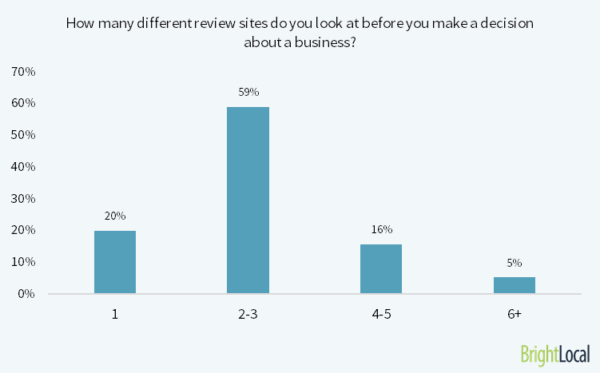
How many dissimilar review sites (eastward.g., Yelp, TripAdvisor) do you await at before you make a conclusion about a business?
Central findings:
- 20 percent of consumers await at ane review site earlier deciding.
- 59 per centum of consumers look at two to three review sites before making a conclusion.
- 21 per centum of consumers look at four or more than review sites before deciding.
This new question focuses specifically on how many review sites people become to earlier they decide about a business. The answers vary depending on the blazon of business concern someone is researching. For instance, if they're looking for a restaurant, they might merely check one or two review sites. But if they are going to buy a new car and the financial stakes are college, they will probably look at more review sites.
When judging a local business on its reviews, which of these factors practise you pay near attention to?
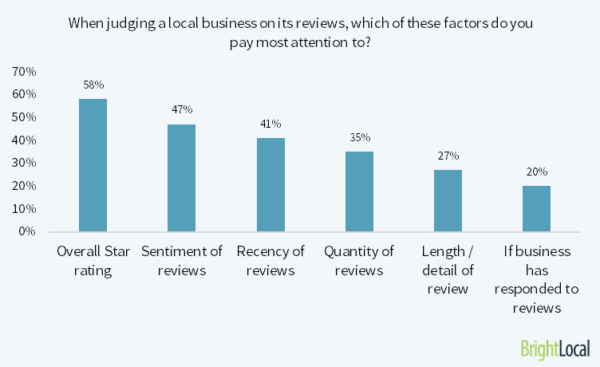
Annotation: Respondents were told to select a maximum of 2 answers.
Cardinal findings:
- 58 percent of consumers put the highest weight on the overall star rating.
- The second nigh important factor is "sentiment of reviews."
- The recency of reviews is also important, coming in third at 41 percent.
When evaluating online reviews, the nigh important factor to consumers is how many stars a business has. Star ratings are a very quick and visual guide to show how trustworthy a business concern is.
But there are other factors that people consider to go a holistic view of a business'southward reputation. Other factors are the sentiment of reviews (i.e., positive or negative comments and statements) and the recency (aka age) of reviews.
As an example, if a business has 3 five-star reviews, but the reviews are two years old, the consumer volition probably cheapen the importance of the star rating because they really want to see more recent reviews.
When selecting a local business to apply, what is the minimum star rating a business must take for you to use them?
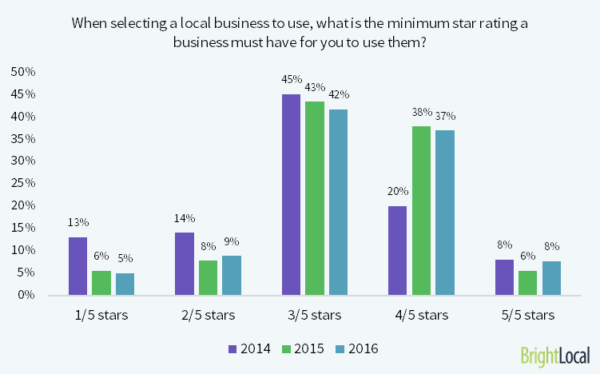
Central findings:
- 87 percent of people desire to see three- to v-star reviews nigh a business earlier they will consider using them.
- Of the consumers surveyed, only fourteen percent would consider using a business with a 1- or two-star rating.
For consumers, star ratings are considered the nigh of import factor in deciding which local business organisation to use. For instance, 56 percent of consumers won't consider using a business with just one to iii stars; in other words, if a business has less than a iv-star rating, that company is losing out on 56 percent of potential customers.
Notably, while consumers consider star ratings to exist an important decision-making factor, they are also realistic — only 8 per centum await a concern to have a 5-star rating before they will consider using them.
How do online customer reviews influence your decision to actually use a local business?

Note: Respondents could select more than than i answer, then these numbers cannot be directly compared to 2015 results.
Key findings:
- 68 percent of people say positive customer reviews brand them more likely to utilise a local business concern.
- 12 percent of consumers say that they read reviews, but those reviews don't influence their determination on which local business to use.
- 42 percent say that negative reviews make them not want to use a local business.
Well-nigh seventy percentage of consumers said that positive reviews make them more likely to use a local business. Additionally, 42 percent of consumers say that negative reviews make them not desire to use a concern. These numbers prove that people seriously consider reviews when making a purchasing conclusion.
Do you trust online customer reviews as much as personal recommendations?
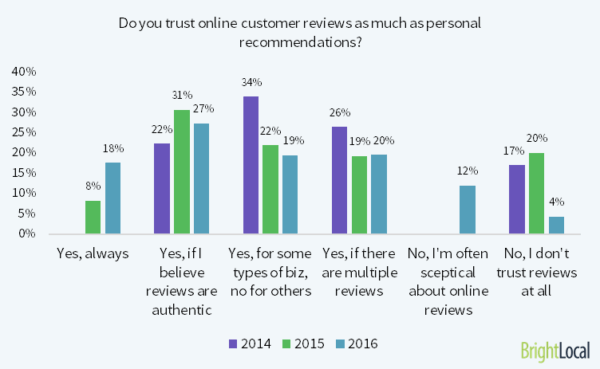
Fundamental findings:
- 84 percent of people trust online reviews every bit much every bit a personal recommendation — if they meet their requirements (vs. 80 pct in 2015).
- Just xvi percentage of consumers surveyed said that they don't trust online reviews (vs. 20 percent in 2015).
- Authenticity is essential — over a quarter of consumers trust reviews more than than personal recommendations but if they believe the review to be genuine.
People trust reviews at present more than ever, but a portion of consumers are concerned about false reviews: 27 per centum of people will trust reviews if they retrieve they are authentic (31 percent in 2015). If consumers think that a review is "planted" or "seems too good to be true," they will take that into consideration.
Simulated reviews, and the effect they take on eroding consumer trust, have become hot topics as of late. As this topic gets more media coverage, consumers go more than aware of the pitfalls of online reviews.
When you read positive reviews for a business, what is the typical next step you take?
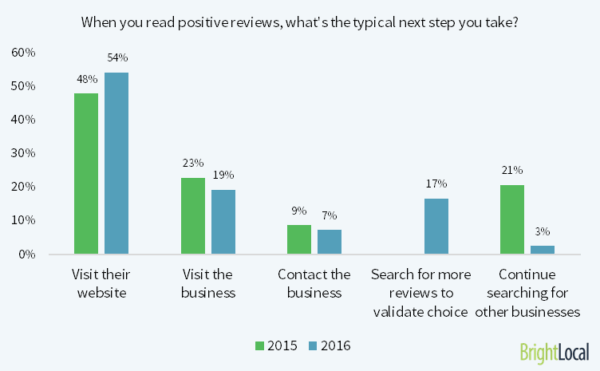
Key findings:
- Afterwards reading positive reviews, 54 percent of consumers will visit the business organisation'south website (48 percent in 2015).
- 19 pct volition visit the business directly.
- 17 percent will search for additional reviews virtually the business.
The nearly common side by side step for consumers who read reviews is to visit the business concern's website (54 pct). This is an easy next step because people are already online, and at that place's typically a link to the concern'south website from the review sites. This does reinforce the need for SMBs to accept a mobile-friendly website.
Only 19 per centum say their next step would exist to visit a business's premises. This will vary depending on the type of business concern a consumer is looking for. For instance, if they're looking for a restaurant, the numbers will exist higher; if they're searching for a physician or nuptials planner — something that might first require an appointment or phone consultation — then it's unlikely that your side by side pace would be to visit the business.
A full 17 percent of consumers say that they would seek out boosted reviews nearly the business they are considering. This indicates a loftier level of interest in a particular business — if a consumer is continuing to look for reviews, so that means they are probably getting closer to a buying decision.
Have you lot ever been asked by a business to leave an online review for them?
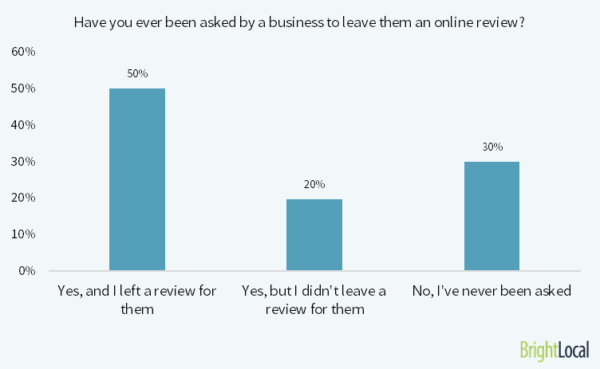
Key findings:
- 70 percent of consumers take been asked by a business concern to leave a review.
- fifty percent of consumers have been asked to leave a review about a business and actually left a review.
This is important: if asked, approximately 71 pct of consumers will get out a review for a business concern. This reinforces the demand for every business to have a reputation marketing strategy.
While this finding does illustrate the importance of asking customers for reviews, businesses must exercise caution and patience in doing so. Why? Likewise many reviews acquired within a short time frame tin look suspicious, pregnant those reviews could stop up getting flagged and filtered out on the review platform. Inquire your customers for reviews gradually over time, and don't overdo information technology.
Additionally, businesses should never use offers to incentivize consumers to go out reviews (That's considered unethical).
Reviews, positive or negative, serve equally a useful feedback tool for businesses. Use this information to improve your customer service or business organisation offerings.
Want to learn more?
Do you want to run into even more questions and answers, besides as a deeper analysis of the results of this year's survey? Cheque out the full 2016 Local Consumer Review Survey.
Opinions expressed in this article are those of the guest writer and not necessarily Search Engine Land. Staff authors are listed hither.
New on Search Engine Country
Most The Author

Sherry Bonelli, owner of early bird digital marketing, is a Search Engine Optimization (SEO) and digital marketing professional with 23+ years of experience. Her digital marketing agency, early bird digital marketing, serves clients all over the country. Sherry is a Google Business organization Profile Gilt Product Expert and columnist for leading marketing websites like Search Engine Journal, Search Engine Land, Moz, Adweek, etc. She received Search Engine Land's 2018 SEO Contributor of the Year Award. She is a recognized presenter and speaker at leading digital marketing conferences, podcasts and webinars like Traffic & Conversion Acme (2018, 2019, 2021), State of Search, Digital Marketer, SCORE, MOZ, Edge of the Spider web, Local Marketing Constitute, Midwest Digital Marketing Briefing, Duct Tape Marketing and others. Sherry holds a Master'southward Degree in Internet Marketing. She is also a LinkedIn Learning Instructor, Adjunct Teacher at several colleges and universities and is the host of The Marketing Plan Podcast. You tin can detect out more information by visiting early bird digital marketing.
petersonprilifigh.blogspot.com
Source: https://searchengineland.com/70-consumers-will-leave-review-business-asked-262802
0 Response to "Percentage of People Who Leave Good and Bad Reviews"
Post a Comment